






Companies are integrating generative artificial intelligence (GenAI) into operations, product design, and customer service, demonstrating that GenAI is transcending novelty and entering core business functions.
- Companies are integrating generative artificial intelligence (GenAI) into operations, product design, and customer service, demonstrating that GenAI is transcending novelty...
- Generation Alpha AI Ten years ago, Artificial intelligence (AI) was a luxury of the Silicon Valley giants.
- ● Compare feedback/responses and forecast the trends of consumers.
- According to the prediction made by the World Economic Forum in 2024 ([https://www.weforum.org/stories/2025/01/tech-ai-digital-twins-productivity-sustainability/ ]), 60% of SME and global manufacturing...
Keep reading for the full breakdown on AI — everything you need to know is covered below.
Generation Alpha AI
Ten years ago, Artificial intelligence (AI) was a luxury of the Silicon Valley giants. These days, with the availability of resources and cloud-based services, small- to medium-sized businesses (SMEs) are realising that AI can be their greatest growth tool. SME owners are consistently in a race on how best they can adopt this tool for the benefit of their businesses; this has led to streamlined operations, enhanced customer services, and improved marketing efforts.
In Nigeria, local fashion retailers are automating their marketing content with AI so that they can offer personalised recommendations to customers [https://oxgital.com/ai-in-marketing-and-advertising-2026-nigeria/ ]; the sort of thing that only global brands have been able to achieve before now. As a business growth analyst, I have witnessed a distinct change; generative AI (GenAI) is no longer increasing efficiency; it is creating new business opportunities, creativity, and customer connections that were previously inaccessible.
RelatedPosts


How Does Gen AI Affect SMEs?
Generative AI are systems which are capable of generating original text, images, audio, and even code for its users. The most popular Gen AI systems are ChatGPT, DALL-E, Grok, Google Gemini, and Claude are the most popular and most adopted. However, outside of these major tools, GenAI serves a more significant business purpose. To SMEs, it implies automation of tasks that are time-consuming, data insights, and helping to innovate without huge amounts of R&D investments.
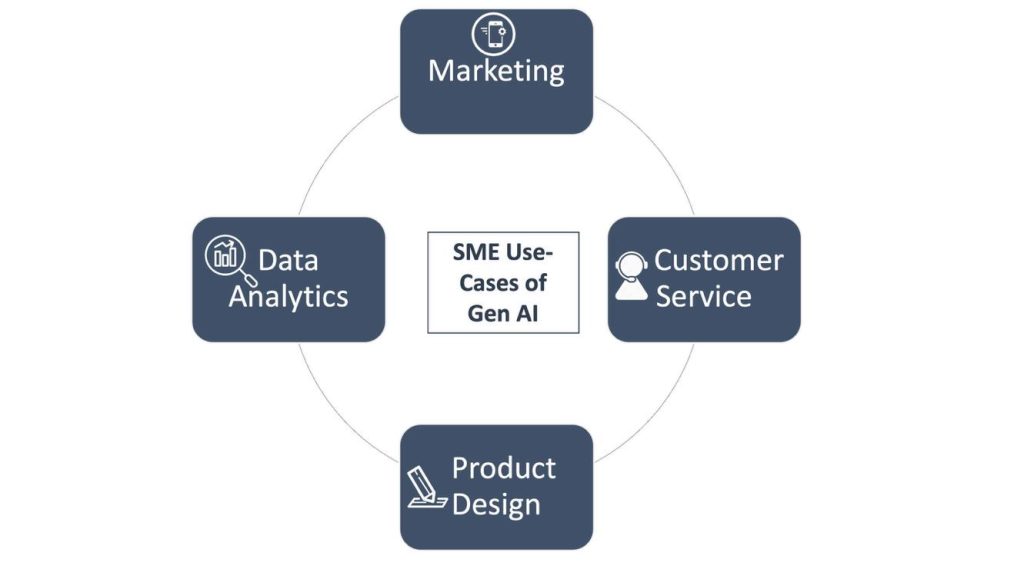
GenAI is generally used by SMEs to:
● Generate ad copy/ social-media posting within minutes.
● Automate customer support responses.
● Create product designs or mock-ups.
● Compare feedback/responses and forecast the trends of consumers.
“The productivity of such companies increased by 20 to 30% for junior employees and 10 to 15% for senior staff”, this is according to a 2025 Deloitte study reported by StackAI ([https://www.stack-ai.com/blog/state-of-generative-ai-in-the-enterprise ]), which investigated the adoption of generative AI by SMEs in marketing and operations.


Growth Levers of Gen AI
From my perspective as a growth analyst, GenAI is not a technology trend alone; it is a structural driver of growth. It feeds on four primary levers that have a direct impact on business growth and profitability:
1. Productivity and Cost Efficiency
The repetitive, low-value tasks that AI tools handle (including scheduling, documentation, content generation, etc.) allow employees to spend their time on strategy and innovation. To illustrate this, a small consultancy utilizing AI to create reports for its clients can maximize time and save employee working hours per week. This will direct human resources to pertinent areas.
2. Speed-to-Market
With the adoption of these AI tools, the Product and marketing teams of SMEs can achieve product launch in record time. Generative AI enables SMEs to prototype, test messaging, and produce images within days rather than weeks, resulting in faster revenue cycles.
3. Customer Interaction and Customization
SMEs, with the help of AI, can analyse behavioural patterns and provide tailored recommendations. With the adoption of simple APIs for the SMEs’ e-commerce sites, SMEs can now provide the same level of personalization as other big techs.
4. Innovation
GenAI assists SMEs in making services previously unavailable available to them, e.g., custom content design, predictive marketing, or AI-based advisory. According to the prediction made by the World Economic Forum in 2024 ([https://www.weforum.org/stories/2025/01/tech-ai-digital-twins-productivity-sustainability/ ]), 60% of SME and global manufacturing innovation in 2027 will be due to AI-driven
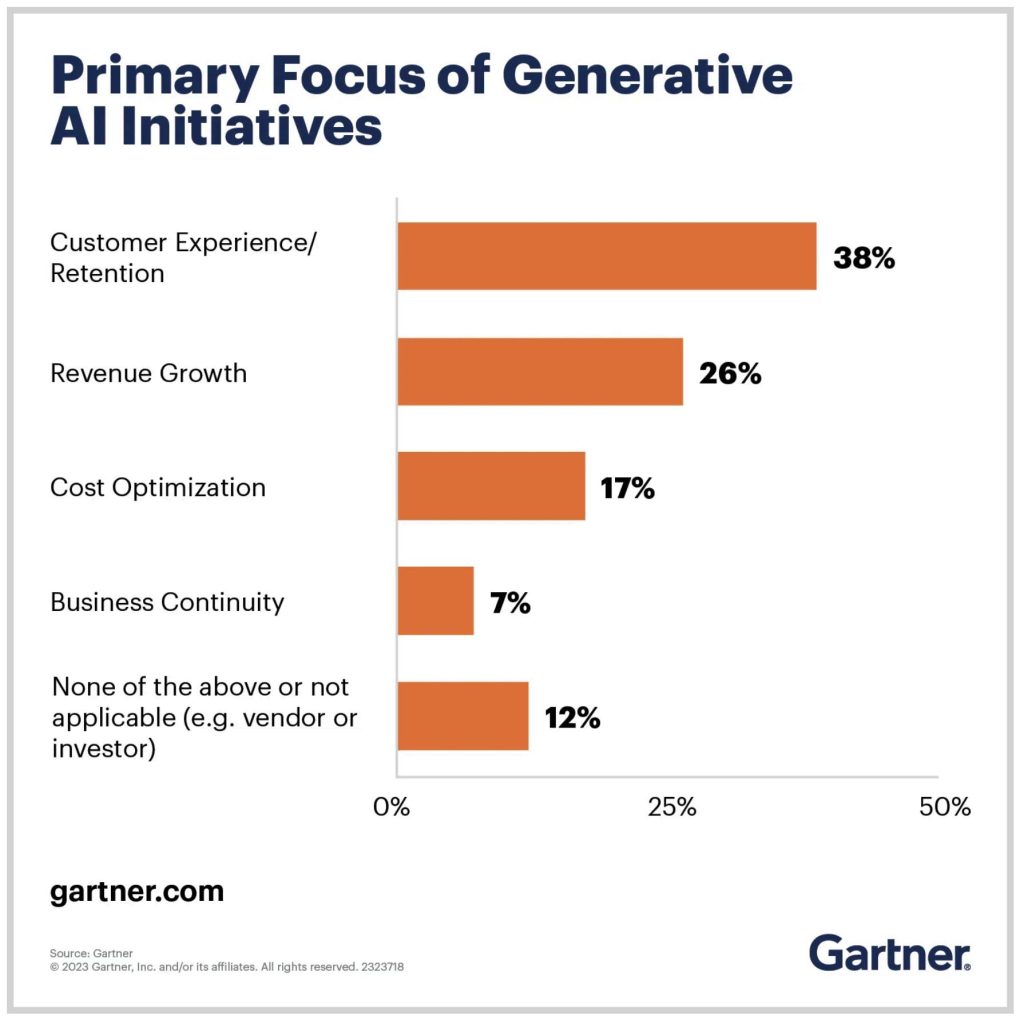
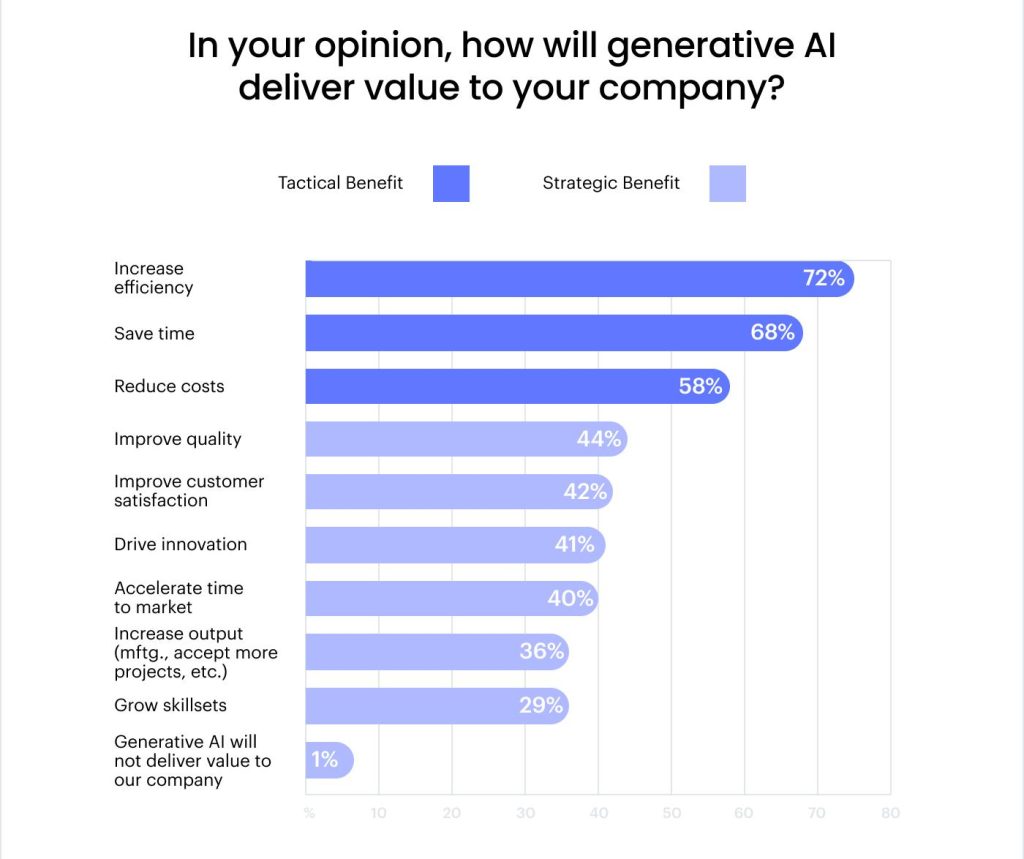
experimentation. Based on some metrics, SMEs that apply AI to creative and analytical processes achieve a 30% faster project turnaround and a 20% increase in client retention. A previous survey has further indicated what business owners think about the importance of Gen AI and the value it will bring to their businesses. Efficiency, time savings, and cost reduction were identified as the highest value.
Challenges and Cautions
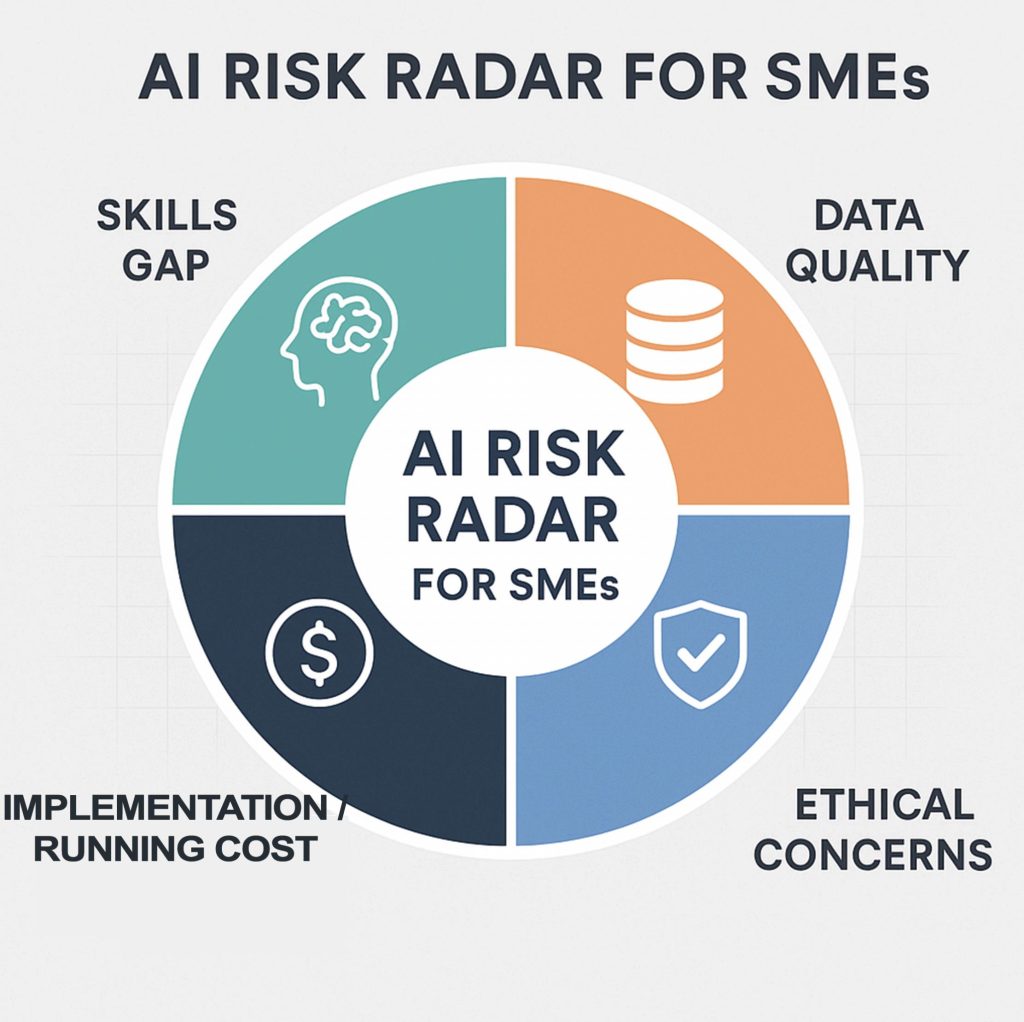
As we know, business growth does not come automatically. The adoption of Gen AI to drive this growth has faced some major challenges that limit it from reaching its full potential, including:
● Skill Gaps: A lot of SMEs are data-illiterate and technologically unskilled.
● Cost vs. ROI Uncertainty: Subscription tools appear to be cheap initially, but increasing scale may soon become costly.
● Data Privacy and Security: SMEs should be able to meet the data-protection rules.
● Overreliance on AI: AI is not creative and does not have context, requiring human feedback.
AI can only be a growth engine when it is not hype-led but strategy-guided, as I usually tell business owners: “AI is not aimed at substituting human resources but enhancing their decision-making and productivity”.
Analyst’s Advice to Move from Curiosity to Strategy
To SMEs who are willing to go beyond trying out AI tools and integrating them into their growth playbook, the following step-by-step guide will help them do so:
● Start with One Use Case. Find a constraining area specific to your business, e.g., content creation or customer service, and test AI on that area.
● Track ROI and KPIs. Saved time, increased response time, or conversion rates. Growth must be quantifiable.
● Upskill Your Team. Promote AI literacy by taking short courses or tutorials with the vendor. Businesses that are AI-literate will be the most competitive SMEs.
● Ensure Human Oversight. Find potential gaps in AI publications or deployment. Creativity with human beings still offers some context, compassion, and moral decision-making.
● Build Partnerships. Work with AI startups or consultants to make the integration easier.
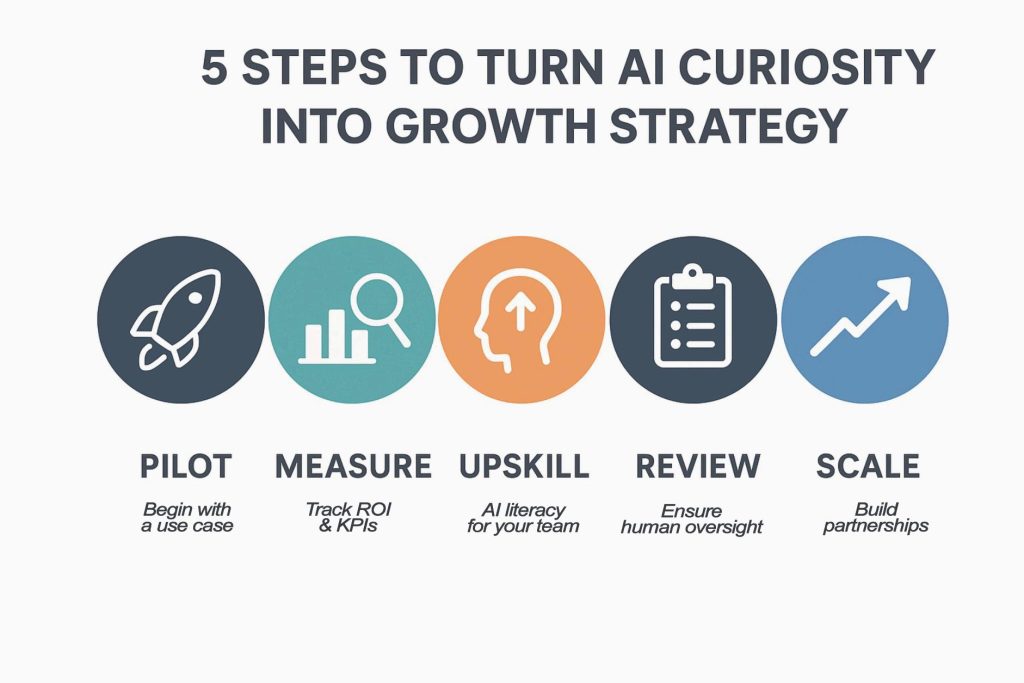
As a growth analyst, I strongly recommend a Pilot-Evaluate-Scale approach. This prevents the bad investments and also makes sure that efforts to implement AI are in alignment with your overall strategy.
Generative AI has become the business innovation equalizer, providing SMEs with high-level features that could previously only be found in multinationals. However, like all instruments of transformation, it brings results only when used intelligently. By 2026 and beyond, the SMEs, which perform well, will be those that smartly integrate human creativity with machine capability, making AI a serious growth driver, rather than a “gimmick”. The winners in this race will not be those business owners and creatives who will not ask “What AI can do?”, but rather “What new value can we build with it?”
This article was written by Samuel Francis Edet | Data-Driven Growth and Digital Strategy Specialist