





Nigeria’s central bank requires banks to implement automated AML systems to combat financial crime in the digital era.
- Nigeria’s central bank requires banks to implement automated AML systems to combat financial crime in the digital era.
- The Central Bank of Nigeria (CBN) issued a directive on Tuesday, March 10, 2026, titled “Baseline Standards for Automated Anti...
- CBN aims to fortify Nigeria’s digitised financial system against threats of money laundering.
- Other players, such as fintechs and international money transfer operators, have 24 months to comply.
Keep reading for the full breakdown on automated anti-money laundering Nigeria — everything you need to know is covered below.
The Central Bank of Nigeria (CBN) issued a directive on Tuesday, March 10, 2026, titled “Baseline Standards for Automated Anti Money Laundering (AML) Solutions for Financial Institutions in Nigeria.”
This order targets banks, fintechs, mobile money operators, and payment service providers. It forces the deployment of tech-driven tools for real-time detection of suspicious transactions.
CBN aims to fortify Nigeria’s digitised financial system against threats of money laundering. The policy aligns with global standards set by the Financial Action Task Force (FATF), which fights money laundering and terrorist financing worldwide.
Automated anti-money laundering system hits banks first
Deposit-taking banks face an 18-month deadline to install fully automated anti-money laundering systems. These setups demand integration of customer ID checks, transaction monitoring, sanctions screening, and risk tools.
Other players, such as fintechs and international money transfer operators, have 24 months to comply. All must link systems to core banking platforms and national ID databases for instant pattern analysis.
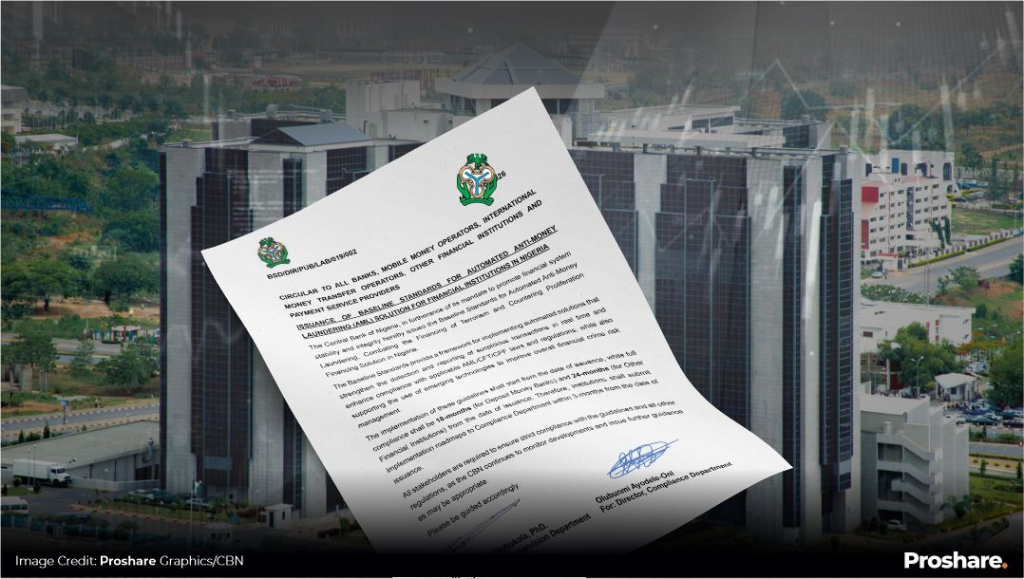

Part of the circular states: “The baseline standards provide a framework for implementing automated solutions that strengthen the detection and reporting of suspicious transactions in real time and enhance compliance with applicable AML/CFT/CPF laws and regulations.”
AI powers automated anti-money laundering system rollout
Artificial intelligence, machine learning, and predictive analytics drive the new automated anti-money laundering system. Banks must screen clients against sanctions lists and politically exposed persons databases nonstop.
Systems track behaviour across channels, flagging odd patterns on the spot. This upgrade promises sharper crime detection over manual methods.
CBN sent the circular to all regulated entities, pushing the adoption of automated anti-money laundering systems across Nigeria’s finance sector. Deposit money banks lead with tighter timelines.