





You can have the best product, the sharpest team, and real traction, but if your paperwork is not in order, one angry co-founder, one investor question, or one legal dispute can bring everything crashing down. And the painful part? Most of these problems start small, back when things felt too early or too informal to “bother with documents.”
- You can have the best product, the sharpest team, and real traction, but if your paperwork is not in order,...
- Most of these problems start small, back when things felt too early or too informal to “bother with documents.” This is...
- It is the first real step from idea to actual business, and it protects you from personal financial risk.
- ESOP Agreement If you want to attract strong talent without burning through cash, you need an Employee Stock Ownership Plan.
Keep reading for the full breakdown on co-founder exit clause template — everything you need to know is covered below.
This is not about being overly cautious. It is about protecting what you are building, so you can feel confident and secure in your startup’s future before someone forces you to wish you had.
Here are the first nine documents every founder needs, and more importantly, why each one actually matters to help you feel in control of your company’s success.
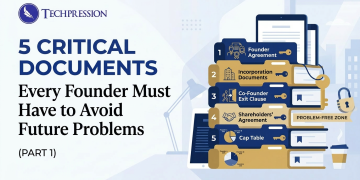
1. Founder Agreement
This is the most important document you will create as a founding team. It clearly defines roles, ownership, decision-making, and dispute resolution, helping prevent conflicts that could threaten the company’s stability. Investors will also ask for this during due diligence, and if you do not have one, it raises serious red flags about how serious or organised your team really is.
2. Incorporation Documents
These make your business a legal entity. Until your company is incorporated, you are personally liable for all debts, contracts, and mistakes, exposing your personal assets. You also cannot open a corporate bank account, sign partnership deals or raise money properly. This paperwork cannot be delayed. It is the first real step from idea to actual business, and it protects you from personal financial risk.
3. Co-Founder Exit Clause
Co-founders leave. Sometimes amicably, sometimes not. Without a clear exit clause, a departing founder can walk away with a chunk of equity they no longer deserve, refuse to hand over access or IP, or even block future funding rounds. This clause should include vesting schedules, buyback terms and what happens to unvested shares. It is uncomfortable to discuss early, but far more painful to figure out mid-crisis.
4. Shareholders’ Agreement
This document governs the relationship between all shareholders and covers matters such as voting rights, share transfers, dispute resolution, and what happens if someone wants to sell their stake. It protects minority shareholders from being sidelined and prevents majority shareholders from making reckless decisions. If you plan to raise money or bring on new partners, this agreement keeps everyone aligned and prevents power struggles that can kill momentum.

5. Cap Table
Your cap table is a live record of who owns what in your company. It tracks equity splits, investor shares, ESOP allocations and dilution over time. A messy or outdated cap table can scare off investors, create confusion during fundraising and lead to serious legal issues if ownership is disputed. Keep it clean, keep it updated and treat it like the financial backbone of your startup, because that is exactly what it is.
6. ESOP Agreement
If you want to attract strong talent without burning through cash, you need an Employee Stock Ownership Plan. This lets you offer equity to employees as part of their compensation. But it must be structured properly with clear vesting schedules, strike prices and terms. A poorly designed ESOP can unfairly dilute founders, confuse employees, or create tax nightmares. Done right, it turns your team into co-owners who are invested in your success.
7. NDA (Non-Disclosure Agreement)
You will constantly share sensitive information with potential hires, advisors, partners, and investors. An NDA legally binds them to keep that information confidential. It might not stop everyone, but it gives you legal recourse if someone leaks your IP, strategy or customer data. Use mutual NDAs when both parties are sharing information, and ensure the terms are enforceable. Do not assume people will “do the right thing.” Protect yourself.
8. IP Assignment Agreement
This is non-negotiable. Every founder, employee, contractor and consultant who creates anything for your company, code, designs, content, strategies, must sign an agreement that assigns all intellectual property to the company, not to them personally. Without this, someone can claim ownership of work they did and either demand payment, block you from using it or sell it elsewhere. Investors will not fund you if your IP ownership is unclear. Get this signed from day one.
9. Trademark / IP Documents
Your brand name, logo, tagline and core IP should be trademarked as early as possible. This stops competitors or opportunists from copying your identity or forcing you into expensive legal battles later. It also adds real value to your company. Trademark registration is not instant, so start the process early. If you are building anything with proprietary tech, also consider patent filings. These documents prove you own what you have built, and that ownership is what investors and acquirers pay for.
These nine documents are not optional extras. They are the legal foundation that protects your equity, your team and your ability to scale without landing in avoidable disasters.
Stay tuned for Part 2, where we cover the documents, you’ll need as you grow, hire, and scale.