





Zero Carbon Charge (CHARGE) reached a major milestone in South Africa’s transition to electric mobility with the construction of two off-grid, solar-powered, ultra-fast EV charging stations underway along the N3 corridor.
- Zero Carbon Charge (CHARGE) reached a major milestone in South Africa’s transition to electric mobility with the construction of two...
- The first, CHARGE N3 Roadside in the Free State, is about 180 kilometres from Johannesburg, while CHARGE N3 Tugela in...
- CHARGE Executive Chairman and Founder Joubert Roux said, “We are grateful to the DBSA for believing in CHARGE’s vision and...
- To commemorate the achievement, CHARGE hosted sod-turning ceremonies at both locations, attended by provincial leadership, municipal officials, and national partners.
Keep reading for the full breakdown on Development Bank of Southern Africa DBSA — everything you need to know is covered below.
The first, CHARGE N3 Roadside in the Free State, is about 180 kilometres from Johannesburg, while CHARGE N3 Tugela in KwaZulu-Natal is about 200 kilometres from Durban and about 180 kilometres from the Roadside location.
As the first completely off-grid, solar-powered, ultra-fast EV charging stations on the N3, they will provide dependable, quick charging on one of the nation’s busiest and most significant transit arteries. These locations are a part of CHARGE’s nationwide deployment of the first 120 off-grid EV charging stations in South Africa.



DBSA’s contribution to CHARGE’s N3 construction
The Development Bank of Southern Africa (DBSA) provided the equity investment that enabled CHARGE to construct its first N3 sites.
CHARGE Executive Chairman and Founder Joubert Roux said, “We are grateful to the DBSA for believing in CHARGE’s vision and providing the investment that has made these N3 sites possible.
“We also pay tribute to our team, whose dedication and hard work have brought us to this momentous occasion. These first N3 stations represent the beginning of a national transformation, creating reliable, renewable, and accessible charging for all South Africans.”
Construction deadline
Construction on both stations has officially begun and is expected to be completed in 2026. Once operational, the CHARGE N3 Roadside and CHARGE N3 Tugela stations will anchor a Johannesburg-to-Durban renewable-energy charging route, bringing South Africa closer to a cleaner transport future.

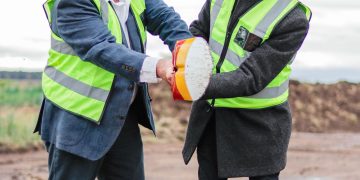
To commemorate the achievement, CHARGE hosted sod-turning ceremonies at both locations, attended by provincial leadership, municipal officials, and national partners.
At the N3 Tugela event near Winterton, the ceremony was attended by the MEC for Economic Development, Tourism and Environmental Affairs (DETEA), MEC Reverend Zondi; the CEO of Trade & Investment KwaZulu-Natal (TIKZN), Mr Sihle Mkondo; and representatives of the Okhahlamba Municipality.
During the CHARGE N3 Roadside sod-turning in the Free State, CHARGE welcomed the MEC of DESTEA, Ketso Makume, and the Speaker of Phumelele Municipality, Topsy Roseline Zwane, with the support of representatives from the DBSA.
DBSA’s investment in Croadside
Techpression reported in May that CHARGE announced a R100 million investment from the Development Bank of Southern Africa (DBSA) to help create infrastructure that can withstand climate change and speed up South Africa’s move to a net-zero transport economy.
The funding will allow CHARGE’s ultra-fast charging stations to be installed along all national roads at 150 km intervals.
CHARGE’s first off-grid, ultra-fast, green electric vehicle (EV) charging station was formally opened to the public on November 28, 2024, in Wolmaransstad, North West Province.
This is South Africa’s first EV charging station powered by renewable energy. It would be a part of the nation’s first nationwide network of 120 solar-powered charging stations, which CHARGE plans to install on major highways at 150-kilometre intervals over the course of the upcoming year.