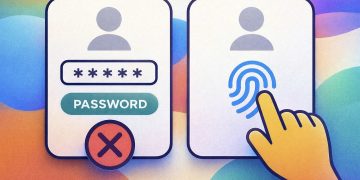






Passkeys achieve 98 per cent success rates and reduce login times by up to 17x on sites like TikTok, whereas passwords fail 98 per cent of the time during sign-ins. As industry titans like Google, Apple, and Microsoft push billions of accounts toward passwordless login guidelines, passkey adoption is expected to take off in the mainstream by 2026.
- Passkeys achieve 98 per cent success rates and reduce login times by up to 17x on sites like TikTok, whereas...
- As industry titans like Google, Apple, and Microsoft push billions of accounts toward passwordless login guidelines, passkey adoption is expected...
- With 69 per cent of consumers holding at least one passkey, up from 39 per cent two years ago, biometric...
- Biometric authentication strengthens FIDO2 by requiring PIN or scan verification before key use.
Keep reading for the full breakdown on biometric authentication passkeys — everything you need to know is covered below.
This change puts an end to decades of credential-stuffing attacks, which exploit weak passwords in workplace and e-commerce systems.
Passkey adoption rates 2026 surge
Google reports that over 800 million accounts now use passkeys, while Amazon sees 175 million users creating them in the first year alone. Dashlane data shows passkey authentications doubling year-over-year to 1.3 million per month, with 40 per cent of users storing at least one, up from last year’s rate.

Microsoft made passkeys the default for new accounts in May 2025, sparking a 120 per cent increase in authentication, as CEO John Bennett notes: “Zero passwords should be the goal, and we’re certainly moving towards a point where the password begins to disappear.”
According to the FIDO Alliance’s Passkey Index, 36 per cent of enrolled users and 26 per cent of sign-ins use passkeys, meaning that 93 per cent of user accounts on Amazon, Google, Microsoft, PayPal, and TikTok are eligible for them.
According to business polls, 87 per cent of US and UK companies are using passkeys, which has reduced the percentage of people using passwords from 76 per cent to 56 per cent . Given that half of authentications are made by e-commerce giants like Target and Home Depot, passkey usage rates are expected to reach early majority status by 2026.
With 69 per cent of consumers holding at least one passkey, up from 39 per cent two years ago, biometric authentication trends contribute to this rise. While Gemini requires passkeys for cryptocurrency access, resulting in a 269 per cent increase, HubSpot and other platforms report login times that are four times faster. According to new benchmarks, Air New Zealand reduced login abandonment by 50 per cent and demonstrated that passkeys increase conversions by 30 per cent .

FIDO2 explained powers passkeys
FIDO2 creates distinct cryptographic key pairs for passwordless login guide flows, and it serves as the foundation for passkeys via WebAuthn and CTAP standards. While the public key confirms identity on servers without revealing secrets, the private key remains locked on your device and can only be opened with biometrics, such as fingerprint or facial scanning. Unlike reusable passwords, which are susceptible to breaches, passkeys are resistant to phishing because they are tied to specific websites.
The single-step multifactor authentication reduces SMS OTP costs and password fatigue. With the private key, your device signs a server challenge to log in; matching the public key allows quick access. Apple, Google, and Microsoft sync these via iCloud Keychain or Password Manager, while FIDO’s Credential Exchange Protocol lets managers share them.
Biometric authentication strengthens FIDO2 by requiring PIN or scan verification before key use. AI-powered password guessing and phishing are blocked by NIST’s FIDO2/WebAuthn rule for federal agencies.This software helped Sony PlayStation enrol 88 per cent faster and log in 24 per cent faster globally.
Passwordless login guide steps
Begin by verifying passkey compatibility on websites such as Google or Amazon, and look for “passkey” prompts during registration or login. Create your initial passkey using a username; your device generates key pairs, securely stores the private key, and registers the public key on the server. Next time, choose the account and verify using biometric authentication methods like Face ID, without manual input.
For legacy accounts, platforms auto-upgrade passwords to passkeys on strong auth like OTP, as Apple enables in iOS 26. Scan QR codes to use phone passkeys on laptops, or use FIDO2 hardware keys for extra security. IT managers integrate via identity providers, removing password fields and training users on biometric confirmation.
Allow passkeys as options first, then make them required across apps like Microsoft 365 or Okta for the whole company. In this way, ABANCA got 42 per cent of people to use their phones for banking. Authsignal’s million-transaction sample shows that 65 per cent of problems with passwordless login guides are caused by mobile autofill.
Biometric authentication tends accelerate
Biometrics outperform CAPTCHA as the only scalable defence against AI bots imitating people. Systems that use facial scans, fingerprints, and risk signals, such as device location, for continuous verification drive passkey adoption rates in 2026. Platforms reduce finance and travel fraud by 93 per cent by linking fingerprints to FIDO2 keys.
In 2026, passkeys support shared devices and single biometric factors. Ubank and Revolut fully deploy them, while KAYCA users opt in at a rate of two-thirds, slashing signup times. With X double login success, companies cut help desk tickets.