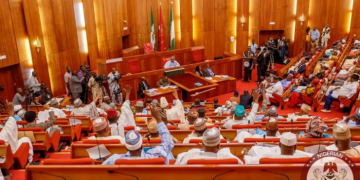






Nigeria’s Senate advanced the Virtual Asset Service Providers Regulation Bill, 2026, to second reading on Tuesday, thereby imposing mandatory licensing and compliance requirements on cryptocurrency exchanges operating in the country.
- Nigeria’s Senate advanced the Virtual Asset Service Providers Regulation Bill, 2026, to second reading on Tuesday, thereby imposing mandatory licensing...
- The bill, sponsored by Deputy Senate President Jibrin Barau, seeks to establish a legal, regulatory and supervisory framework for virtual...
- Therefore, the proposed law would require cryptocurrency exchanges, blockchain-based investment platforms, and other virtual asset service providers to obtain licences...
- “If we regulate crypto in isolation, we risk creating confusion.
Keep reading for the full breakdown on crypto regulation — everything you need to know is covered below.
The bill, sponsored by Deputy Senate President Jibrin Barau, seeks to establish a legal, regulatory and supervisory framework for virtual assets, digital assets and Virtual Asset Service Providers in Nigeria.
What’s driving the crypto regulation push
Senate Whip Tahir Monguno, who presented the bill on behalf of Barau during plenary in Abuja, identified unregulated crypto activity as a direct enabler of financial crime.
RelatedPosts


“Yet, while innovation has surged, regulation has lagged behind. This has created loopholes that allow misuse, fraud, and financial crimes to flourish; loopholes that expose honest citizens to loss and exploitation; and loopholes that threaten the stability of our financial system,” Monguno said.
Barau, summing up the debate, said the bill would provide legal protection for millions of Nigerians, particularly young entrepreneurs and traders, who rely on cryptocurrency as a source of income.
Therefore, the proposed law would require cryptocurrency exchanges, blockchain-based investment platforms, and other virtual asset service providers to obtain licences and comply with regulatory standards to protect consumers and the financial system.
Barau said the bill was not intended to discourage innovation. “The intent of this Bill is simple: to bring order, confidence, and accountability into the virtual asset ecosystem. It does not seek to stifle innovation or punish creativity. On the contrary, it aims to create a fair and predictable environment where innovation can thrive under clear rules and responsible oversight,” he said.

Senator Adetokunbo Abiru urged the Senate to harmonise the proposed legislation with existing financial laws, including the Investments and Securities Act and BOFIA.
“If we regulate crypto in isolation, we risk creating confusion. We need a coordinated framework for the entire digital finance industry,” Abiru said.
The Senate then referred the bill to the Committee on Capital Market for further review, with the committee expected to report back within four weeks.
The bill is also expected to align Nigeria’s regulatory framework with international standards set by the Financial Action Task Force and the International Monetary Fund.
How the bill differs from the ISA 2025
Nigeria already has the Investments and Securities Act (ISA) 2025, which formally recognises digital assets as securities and places them under the regulatory oversight of the Securities and Exchange Commission (SEC).
The ISA 2025 established the legal status of digital assets and expanded the SEC’s authority over the sector, but did not provide a comprehensive operational framework for how Virtual Asset Service Providers (VASPs) such as cryptocurrency exchanges, brokers, custodians, and wallet providers should be licensed, supervised, and monitored on a day-to-day basis.
The proposed Virtual Asset Service Providers Regulation Bill, 2026, seeks to close that regulatory gap. The bill would create a dedicated legal and supervisory framework specifically for virtual assets, digital asset businesses, and VASPs operating in Nigeria.
The existing law primarily focuses on classifying digital assets and placing them under regulatory oversight, while the proposed bill goes further by introducing detailed requirements for market participants.
These include mandatory licensing, compliance obligations, transparency standards, consumer protection measures, anti-money laundering controls, and ongoing regulatory reporting requirements for cryptocurrency exchanges and other virtual asset operators.
In effect, the ISA 2025 established what digital assets are under Nigerian law, while the VASP Regulation Bill, 2026, seeks to define how companies dealing in those assets must operate, comply, and be supervised within the country’s financial system.
If approved, Nigeria would join Kenya, South Africa, and Ghana in implementing dedicated regulatory frameworks for cryptocurrency businesses.