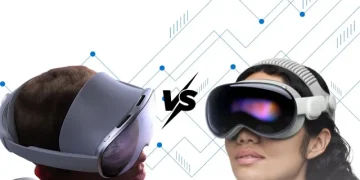






Price vs. power: Where the Samsung Galaxy XR stands against the Apple Vision Pro
- power: Where the Samsung Galaxy XR stands against the Apple Vision Pro An exciting clash unfolds in the mixed reality arena...
- The Galaxy XR is the first Android XR device to be released by Google, providing a higher-end alternative to Apple’s...
- Key to Galaxy XR’s appeal is its multimodal interaction; users can control apps and environments via eye, hand, and voice...
- “With breakthrough performance of M5, Vision Pro delivers sharper details and longer battery life,” said Apple’s Worldwide Product Marketing VP...
Keep reading for the full breakdown on Apple Vision Pro — everything you need to know is covered below.
An exciting clash unfolds in the mixed reality arena as Samsung launches its Galaxy XR to compete with Apple’s Vision Pro. The Galaxy XR is the first Android XR device to be released by Google, providing a higher-end alternative to Apple’s Vision Pro at a lower price point. A common inquiry is how these two titans compare in terms of user experience, price, and features.
Samsung Galaxy XR: Open access to XR Innovation
Samsung’s Galaxy XR is built on the new Android XR platform, representing a bold step into AI-native, spatial computing experiences. Priced at $1,799, it provides a gateway for immersive work and entertainment with integrated apps like HBO Max and Google services.
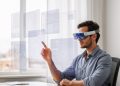

Key to Galaxy XR’s appeal is its multimodal interaction; users can control apps and environments via eye, hand, and voice gestures.
It is anticipated to facilitate the seamless integration of 3D digital content with physical environments, as it is powered by Qualcomm’s Snapdragon XR2+ Gen 2 processor and equipped with Samsung’s Gemini AI assistant.
Samsung emphasises an open ecosystem approach for XR innovation “[Galaxy XR] expands the vision for mobile AI into a new frontier,” according to Won-Joon Choi, Samsung’s Mobile Experience COO.
Apple Vision Pro: High performance meets premium comfort
Apple recently upgraded its Vision Pro headset with a powerful M5 chip and the soft Dual Knit Band to improve comfort. This headset has elevated the bar.

The Vision Pro, which is approximately twice the price of Samsung’s product, is distinguished by its superior processor, a 3nm M5 chip that integrates a 10-core CPU and GPU, and sophisticated features such as Dolby Vision HDR support.
Apple’s visionOS 26 introduces new spatial apps and immersive content, including Apple TV’s 3D movies and interactive experiences. “With breakthrough performance of M5, Vision Pro delivers sharper details and longer battery life,” said Apple’s Worldwide Product Marketing VP Bob Borchers.
Comparison of hardware and experience
The two headsets have standard core technologies, including eye-tracking, spatial audio powered by Dolby Atmos, and six world-facing cameras. In contrast to the Galaxy XR’s 100Hz refresh rate, the Vision Pro boasts a slightly clearer visual experience due to its higher refresh rate of 120Hz.
The default storage and RAM are identical at 256GB and 16GB LPDDR5X RAM, respectively. Nevertheless, Vision Pro offers upgrade options that extend to 1TB. Samsung does not support Dolby Vision HDR, but Apple still maintains a competitive advantage regarding video clarity. The Galaxy XR’s Snapdragon XR2+ Gen 2 processor is competent but inferior to Apple’s M5 chip.
Accessibility meets affordability vs. premium power
Samsung positions the Galaxy XR as a more budget-friendly entry into mixed reality with open, AI-powered capabilities suitable for broad audiences. Apple Vision Pro continues to be a premium product that boasts a tightly integrated ecosystem, cutting-edge technology, and superior visual fidelity.
The competition with Apple is intensifying as Samsung expands Android XR, which includes plans for AI eyewear, providing consumers with various options based on their budget and requirements.
Samsung Galaxy XR and Apple Vision Pro are excellent examples of the disparity in innovation between accessible platforms and premium experiences in this swiftly evolving market. This has established the groundwork for the ongoing competition in mixed reality technology.