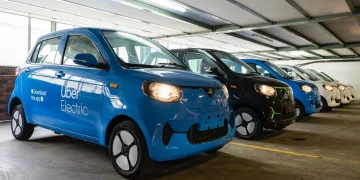






Uber has taken a big step towards sustainable travel in the region by formally launching its first fleet of electric vehicles (EVs) in South Africa.
- Uber has taken a big step towards sustainable travel in the region by formally launching its first fleet of electric...
- Seventy EVs are now in use in Johannesburg, where the rollout started. The fleet is anticipated to reach 350 vehicles...
- The two companies also worked together on Uber’s electric motorcycle program.
- Valternative provides access to charging infrastructure and fully manages the vehicles.
Keep reading for the full breakdown on eco-friendly transportation — everything you need to know is covered below.
Seventy EVs are now in use in Johannesburg, where the rollout started. The fleet is anticipated to reach 350 vehicles by the end of January.
The cars in use are four-seater Henrey Minicars that Valternative Energy bought from China. To make this project a reality, Valternative has teamed up with Uber Electric. The two companies also worked together on Uber’s electric motorcycle program.



The company is a trailblazer in South Africa’s EV ecosystem, having created the nation’s first “swap-and-go” electric bike system that combines subscription-based battery services with battery-swap stations.
For this idea to succeed, Valternative’s access to charging infrastructure is essential since it allays worries about growing fuel prices and gives drivers steady income. This program supports Uber’s worldwide goal to have all rides and deliveries be completely emission-free by 2040. Uber Electric will be a cost-effective green substitute for commuters, with fares similar to those of Uber Go.
Uber Electric’s planned expansion
Uber Electric will spread to several cities, according to Deepesh Thomas, General Manager for Uber Sub-Saharan Africa, who spoke at the Johannesburg launch event.
He emphasised the advantages for drivers: “Drivers don’t need to purchase a vehicle—they can rent one. Valternative provides access to charging infrastructure and fully manages the vehicles. This removes the financial burden of buying or financing an EV. Drivers simply focus on trips, and as the model scales, the economics become more favourable than traditional internal combustion engine vehicles.”

Additionally, Thomas pointed out that expanding Uber Electric and Uber Moto will contribute to reducing “transport poverty” in South Africa by offering sustainable and reasonably priced mobility options.
Challenges in onboarding drivers
Mohamed Jeeva, CEO of Valternative, discussed the difficulties in onboarding drivers: “It took time to change mindsets. Many drivers operate on extremely tight budgets, often starting their day with just enough cash for fuel. When that runs out, they stop working.
“Our system removes this cash-flow restriction. Drivers receive weekly payouts from Uber, and since they don’t need to buy fuel, there’s zero cash interference during the week.”
With more than 200,000 EV drivers using Uber’s platform worldwide, this South African launch represents a major turning point in the company’s sustainability efforts.