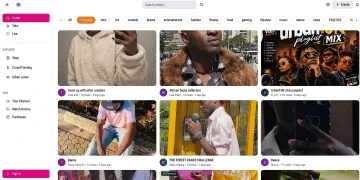





Kenya has launched a homegrown TikTok rival, and this one has government backing. UrbanTok, owned by Mzawadi Group, officially debuted on April 30, targeting a market where TikTok already commands 18.4 million users aged 18 and above.
- Kenya has launched a homegrown TikTok rival, and this one has government backing.
- UrbanTok, owned by Mzawadi Group, officially debuted on April 30, targeting a market where TikTok already commands 18.4 million users...
- It launched at the Connected Africa Summit with Kenya’s Principal Secretary for ICT on stage.
- John Kipchumba Tanui, who attended the launch, addressed the issue directly, saying: “Kenyan creators have struggled with external algorithms and...
Keep reading for the full breakdown on Connected Africa Summit — everything you need to know is covered below.
The platform promises to put earnings directly into the hands of local creators, something TikTok has consistently failed to deliver. It launched at the Connected Africa Summit with Kenya’s Principal Secretary for ICT on stage.
UrbanTok is designed to let creators share videos, go live, sell products, crowdfund, and charge for premium content, all on a platform built and operated locally.
UrbanTok bets on local payments to flip the creator economy
The monetisation angle is central to UrbanTok’s pitch. Principal Secretary for the State Department for ICT and Digital Economy, Eng. John Kipchumba Tanui, who attended the launch, addressed the issue directly, saying: “Kenyan creators have struggled with external algorithms and foreign payment gateways to earn from their hard work.
UrbanTok is designed to put monetisation directly into the pockets of our local talent seamlessly.”
Creators in Kenya and across Africa who earn from TikTok face a system in which gifts are purchased at higher rates than in wealthier regions, and earnings often have to be withdrawn through foreign platforms like PayPal, adding friction and fees at every step.
In markets like Nigeria, access to TikTok’s creator monetisation tools remains restricted, leaving many creators with large audiences but minimal direct income. UrbanTok’s local infrastructure targets precisely that gap.

The web version is already live with creator content, while an Android app was briefly available on the Google Play Store before being taken down, suggesting the rollout is still in progress.
The platform is not the first to try this. Yafreeka, a Kenyan video platform launched by content creator Andrew Kibe after his YouTube channel was shut down, attracted early attention but has since faded, sitting at just over 10,000 downloads on the Play Store with little active conversation.
Building a social platform is one thing. Getting creators and audiences to abandon the network effects of a service with 18 million users in a single country is another thing entirely. UrbanTok’s next test is turning government backing and creator goodwill into a user base that stays.