





Every day, billions of people type a few words into a white rectangle and trust it to make sense of the world. That rectangle has barely changed since 1998. Now, Google says the future of search will look nothing like the one people grew up using.
- Every day, billions of people type a few words into a white rectangle and trust it to make sense of...
- Now, Google says the future of search will look nothing like the one people grew up using.
- It accepts text, images, files, videos, and Chrome tabs as inputs in the same field, while still returning the same...
- People are not searching less because of AI.
Keep reading for the full breakdown on AI agents — everything you need to know is covered below.
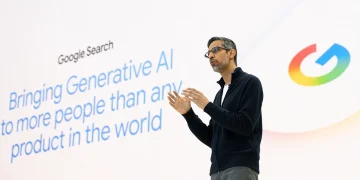
At Google I/O 2026 in Mountain View, the company unveiled what it calls an intelligent AI-powered search box, powered by its newest Gemini 3.5 Flash model. Google’s vice president and head of Search, Liz Reid, described the update as “the biggest upgrade to our iconic search box since its debut over 25 years ago.” That is not just a marketing tagline. It is a structural admission that the way humans find information online is being rewritten from scratch.
From keywords to conversations: what the AI-powered search box actually does
The redesigned AI-powered search box dynamically expands as users type, gives room to describe a full question, and surfaces AI-powered question suggestions that go beyond standard autocomplete. It accepts text, images, files, videos, and Chrome tabs as inputs in the same field, while still returning the same range of search results.



That last detail matters. Google is not dismantling its search engine. It is layering a conversational AI brain on top of it, allowing users to engage with queries in a way that would have seemed absurd just three years ago. Instead of hunting for the right combination of keywords, a person can now describe what they need in plain language, upload a document for context, and receive a synthesized, interactive response rather than ten blue links.
Liz Reid put it plainly in a press briefing: “This new search box puts our most powerful AI tools right at your fingertips, and you can ask across modalities with text, images, files, videos, and search reasons across them all.”
The numbers behind this shift are hard to dismiss. AI Mode surpassed one billion monthly users just one year after its debut, with queries more than doubling every quarter since launch. Last quarter, Google reported that overall search queries reached an all-time high. People are not searching less because of AI. They are searching more and asking harder questions.
AI search agents that work while you sleep
The AI-powered search box is only one piece of what Google announced. The company is also introducing a new class of background tools called information agents. Liz Reid described one use at I/O: “You could send an alert to track market movements in a particular sector with very specific parameters, and the agent will map out a monitoring plan for you, including the tools and the data it needs to access, like our real-time finance data. It will then keep track of those changes and let you know when the conditions are met, and provide a synthesized update with links and information you can dive into further.”

The first type of these agents will look across the web, including blogs, news sites, and social posts, and will also tap Google’s real-time data on finance and shopping. Information agents will launch this summer for Google AI Pro and Ultra subscribers.
The ripple effects of this redesign reach far beyond individual users. Tech reporter Jay Peters wrote for The Verge after the announcement: “It’s not hard to imagine a future where, someday, Google just makes everything happen in one universal search box.” He also cautioned that the shift carries a structural tension. If Google absorbs every task users once turned to the broader web to complete, it risks hollowing out the ecosystem of publishers and websites its AI is trained to summarize.
Data already shows the strain. SISTRIX research found that click-through rates at position one in Google Search collapsed from 27% to 11% in the months leading up to the I/O announcement. Publishers who depended on search traffic to survive are now building for an AI-powered search box that may answer questions without ever sending a reader their way.
For anyone who grew up typing two-word queries and hoping for the best, the search box they knew is simply no longer there.