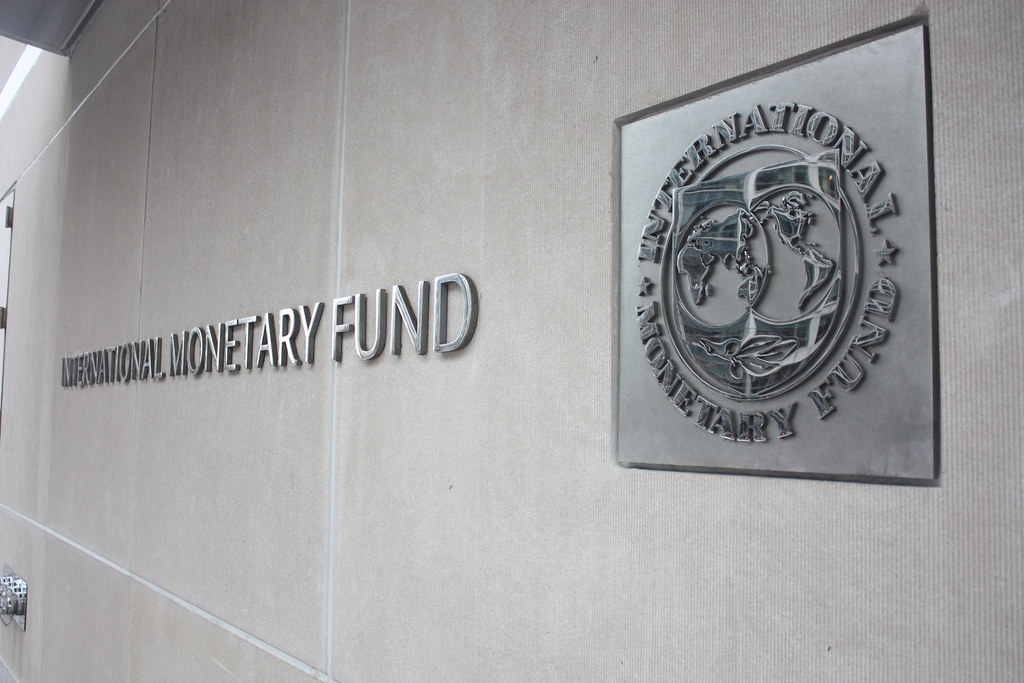





The International Monetary Fund (IMF) has urged Nigeria to strengthen its regulatory framework for stablecoins, warning that the rapid adoption of dollar-backed digital assets is outpacing existing oversight mechanisms.
- The International Monetary Fund (IMF) has urged Nigeria to strengthen its regulatory framework for stablecoins, warning that the rapid adoption...
- In its latest assessment released on Tuesday, the Fund noted that stablecoins such as USDT and USDC are becoming increasingly...
- Stablecoins accounted for 43 per cent of those transactions.
- For startups and fintech firms, stablecoins offer faster settlement times and lower transaction costs than many traditional payment channels.
Keep reading for the full breakdown on Blockchain — everything you need to know is covered below.
In its latest assessment released on Tuesday, the Fund noted that stablecoins such as USDT and USDC are becoming increasingly popular among Nigerians seeking faster cross-border payments, digital savings options, and protection against naira volatility.
According to the IMF, the growing use of stablecoins for remittances, international transactions, freelance payments, and access to dollar-denominated assets underscores the need for effective regulation to safeguard financial stability and consumer protection.



Why the IMF is focusing on stablecoins
The IMF’s concerns are centred less on cryptocurrency speculation and more on the growing role of stablecoins in everyday financial activity. Because their value is linked to established currencies such as the US dollar, stablecoins have become increasingly popular in countries with weaker local currencies, including Nigeria, Ghana, and Kenya, where they are widely used for remittances, international payments, digital savings, and freelance earnings.
Between July 2024 and June 2025, Sub-Saharan Africa received more than $205 billion in on-chain value, representing a 52 per cent year-on-year increase and making the region one of the world’s fastest-growing crypto markets. Stablecoins accounted for 43 per cent of those transactions.
While acknowledging the opportunities for financial innovation, the IMF noted that the rapid growth of stablecoins raises concerns around capital flows, anti-money laundering compliance, consumer protection, and the effectiveness of monetary policy.
In its assessment, the Fund stated that Nigerian authorities are strengthening the regulatory and supervisory framework for crypto assets to address risks associated with capital flight, currency speculation, money laundering, terrorism financing, and consumer fraud.

“The authorities are strengthening the regulatory and supervisory framework for crypto assets to address potential risks, including undetected capital outflows and currency speculation, money laundering, terrorism financing, and consumer fraud.”
The IMF also urged regulators to continue improving oversight of cryptocurrency platforms operating within the country while ensuring compliance with existing financial regulations.
The warning reflects a new transformation taking place in Nigeria’s digital finance ecosystem. What was once primarily a tool for crypto traders has increasingly become part of everyday financial infrastructure, supporting remittances, cross-border commerce, international settlements, and digital savings.
For startups and fintech firms, stablecoins offer faster settlement times and lower transaction costs than many traditional payment channels. As a result, adoption continues to rise across major African markets, with Nigeria remaining one of the continent’s most active centres for cryptocurrency activity.
The growing popularity of stablecoins has also attracted the attention of policymakers across Africa and beyond, as regulators seek to balance innovation with financial stability.
Among those raising concerns is Lesetja Kganyago, Governor of the South African Reserve Bank, who warned in 2025 that the rapid expansion of stablecoins, particularly those backed by the US dollar, could weaken the influence of African central banks over their domestic monetary systems.
Speaking to CNBC Africa, Kganyago argued that dollar-backed stablecoins could undermine local currencies by increasing reliance on foreign-denominated digital assets.
Similar concerns have been echoed by South African authorities. In its 2025 Financial Stability Review, the South African Reserve Bank identified cryptocurrencies and stablecoins as emerging risks to financial stability, warning that the growing integration of digital assets into the broader economy could create new vulnerabilities for the financial system.
What this means for Nigeria’s crypto sector
Nigeria already recognises digital assets under the Investments and Securities Act (ISA) 2025 and has introduced licensing frameworks for crypto service providers through the Securities and Exchange Commission.
The Senate has also advanced the Virtual Asset Service Providers Regulation Bill, 2026, to second reading on Tuesday, as previously reported by Techpression, to impose mandatory licensing and compliance requirements on cryptocurrency exchanges operating in Nigeria.
The proposed law would require cryptocurrency exchanges, blockchain-based investment platforms, and other virtual asset service providers to obtain licences and comply with regulatory standards to protect consumers and the financial system.
The latest recommendation now suggests that stablecoins may require more focused regulatory attention as their use expands beyond trading and into everyday financial activity.
That could influence how exchanges, fintech startups, payment providers, and virtual asset service providers operate in the coming years.
The conversation is also coming at a time when policymakers around the world are developing new rules for stablecoins, now positioning Nigeria as part of a broader global effort to define how digital dollars fit into the future of finance.
Comments 1