





According to CB Insights, 38 per cent of startups fail because they run out of cash or fail to raise new capital—a clear indication that understanding the stages of startup funding is not optional for founders. Every startup begins with an idea, but only those that navigate the right stages of startup funding survive long enough to matter. Behind every breakout company is a sequence of funding rounds that shapes its journey from concept to expansion.
- According to CB Insights, 38 per cent of startups fail because they run out of cash or fail to raise...
- Every startup begins with an idea, but only those that navigate the right stages of startup funding survive long enough...
- The capital raised supports early development, market research, and building a small team.
- Investors are no longer backing just an idea—they are backing a model that shows signs of repeatability and scalability within...
Keep reading for the full breakdown on Fundraising — everything you need to know is covered below.
Startup funding stages are not just about raising money. They reflect investor confidence, business maturity, and a company’s readiness to take on bigger risks and opportunities. Each stage comes with new expectations, larger capital inflows, and tougher scrutiny. For founders, mastering these startup funding stages is the difference between scaling with intent and running out of runway.
Seed Funding: Turning Ideas into Reality
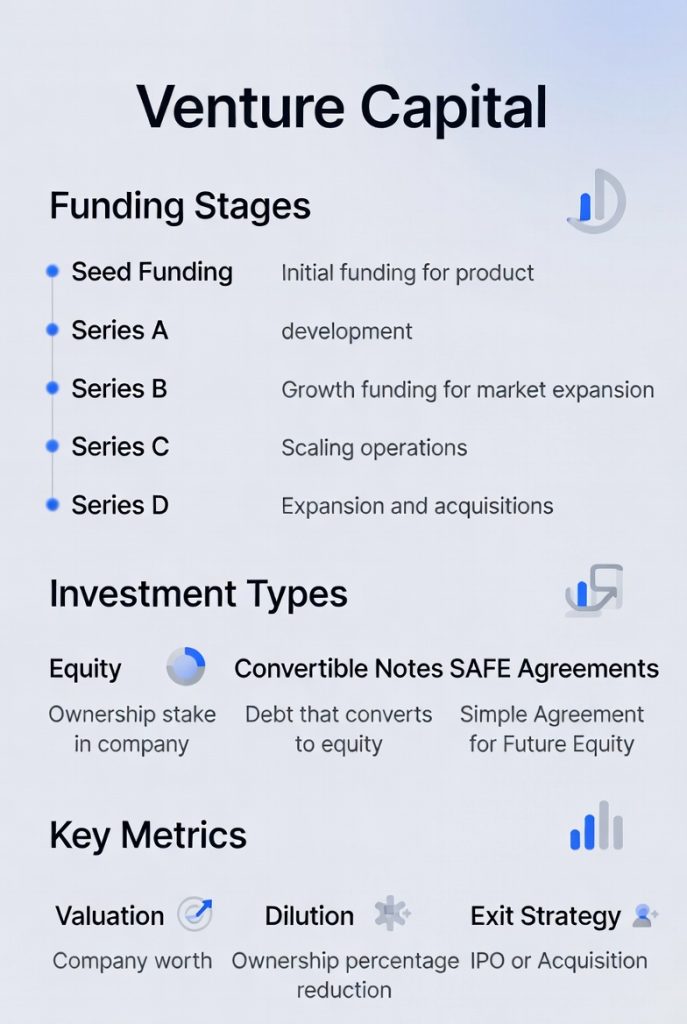
The first stage of startup funding is seed funding, where the financial journey truly begins. At this stage, founders focus on transforming an idea into a workable product, often a minimum viable product (MVP). The capital raised supports early development, market research, and building a small team.
RelatedPosts



Investors in this startup funding stage are betting on potential rather than proof. Angel investors, early-stage venture firms, and even friends and family play a major role. The goal is simple: validate that the idea can work in the real world. Without this validation, progression to later stages of startup funding becomes almost impossible.
Series A: Building a Scalable Foundation
In the progression of startup funding stages, investors provide Series A funding after early traction is established. This stage is about refining the business model and building a foundation for long-term growth. Companies are expected to demonstrate product-market fit, user growth, and early revenue signals.
Funding at this stage supports product improvement, hiring key talent, and expanding customer acquisition efforts. Investors are no longer backing just an idea—they are backing a model that shows signs of repeatability and scalability within the startup funding stages framework.
Series B: Fueling Market Expansion
As startups advance through funding stages, Series B marks the shift from validation to expansion. By this point, the product works, and demand is clear. The focus moves to entering new markets, growing teams, and scaling operations.

Series B rounds are larger and typically involve established venture capital firms. At this stage in the startup funding journey, the company is no longer experimenting; it is executing. Growth must be measurable, and performance metrics drive investor confidence.
Series C: Scaling to Market Leadership
Among the later stages of startup funding, Series C is where companies aim for dominance. Funding is used to scale aggressively, expand internationally, develop new products, or acquire competitors.
Investors at this stage include private equity firms, hedge funds, and institutional players. These participants in the startup funding stages expect strong revenue, proven models, and a clear path to profitability or public listing.
Series D: Expansion, Acquisitions, and Strategic Moves
Not all startups reach this final phase of startup funding stages, but those that do are often preparing for major transitions. Series D funding may support acquisitions or new market entries or serve as a bridge to an IPO. In some cases, it helps regain momentum if growth slows.
This stage reflects a company either doubling down on expansion or recalibrating its strategy. At this stage of startup funding, investors expect maturity, resilience, and global competitiveness.
From seed to Series D, startup funding stages represent more than capital—they mark shifts in expectations, pressure, and opportunity. Founders who understand these stages position themselves not just to raise funds but also to build companies that endure.